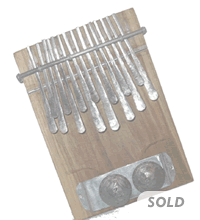
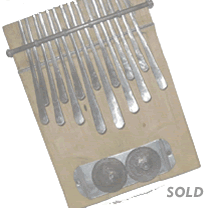
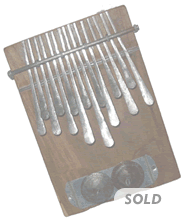
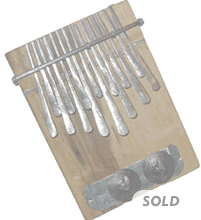
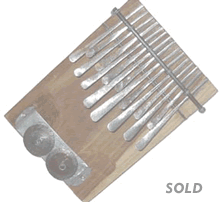
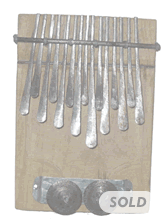
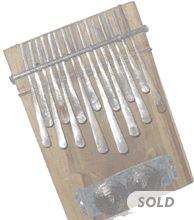
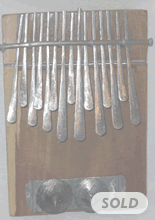
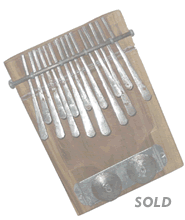
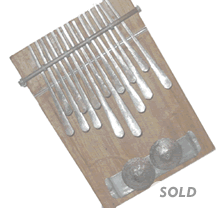
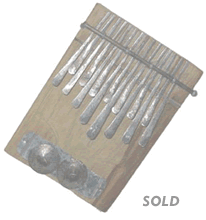
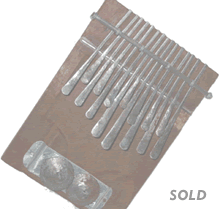
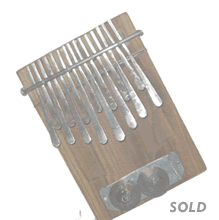
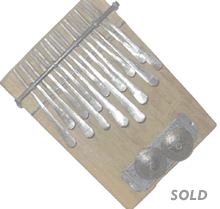
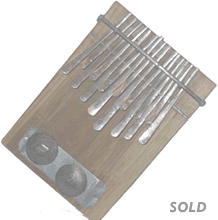
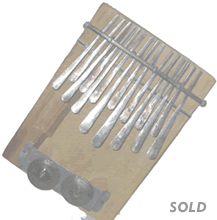
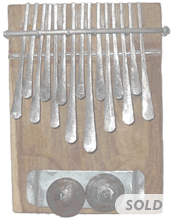
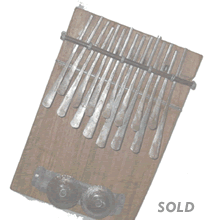
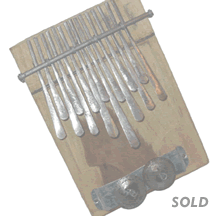
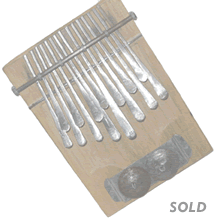
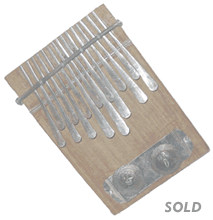
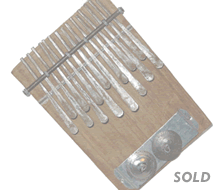
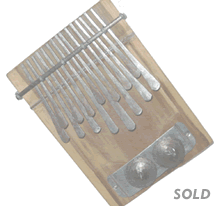
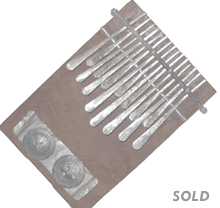
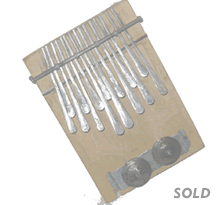
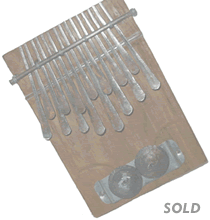
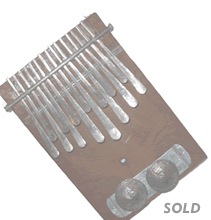
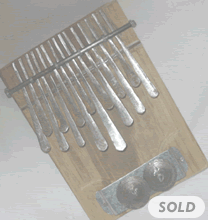
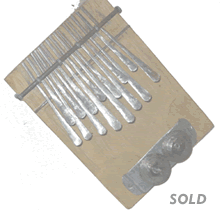
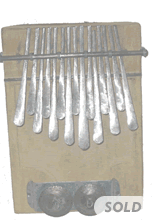
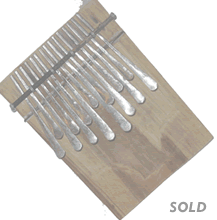
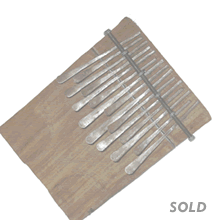
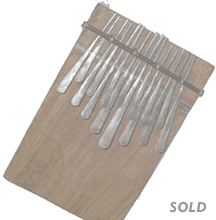
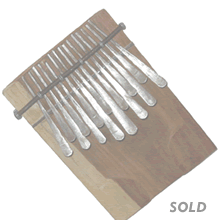
Karimba (7/22/05
-all karimbas are currently sold out. Please check back!)
Karimba
is a smaller instrument in the mbira family. It was popular with the waNyika
people of eastern Zimbabwe. During the partition of Africa, Shona speaking people
who played Karimba ended up being residents and citizens of Mozambique where
the instrument flourished. It was during a family re-unions that the late Jeke
Tapera brought the instrument back to Zimbabwe. A relatively easy instrument
to play with a fairly modern repetoire, it is primarily a solo instrument. Most
of the standalone instruments on this site where built by Tshaka Chawasarira.
Mr. Chawasarira, a graduate of Kwanongoma College of Music and a Roman Catholic
Catechist has played a significant role in the evolution of the karimba in Zimbabwe.
While composing karimba music for the Catholic church, Chawasarira needed four
additional notes on the Karimba for his compositions. He developed, tested and
integrated these notes into the 15-key karimba making it the now world renowned
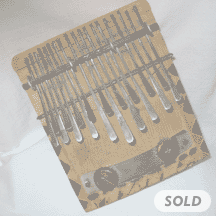
Chawasarira 19-key karimba. Besides his trademark, 19-key karimba, Chawasarira
also makes the regular 15- key karimba, and the smaller 15 key ndimba in the
male and female renditions. The matepe and dzavadzimu are also in his development
repertoire. His ability to improvise and experiment in the mbira development
cycle has produced some of the most interesting and collectible instruments.
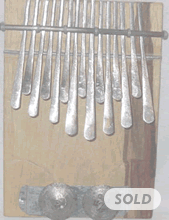
Characteristic of Chawasarira's work is the level of detail,
decorations and workmanship he put forward. Virtually all his mbiras
have a 'pillow' stick at the top front of each instrument which helps
stabilize the instrument and keep it from going out of tune. For the
karimba, Chawasarira uses the softer wood from the fig tree
(muonde) which allows him to carve out the hole in the lower portion
of the soundboard for amplifications purposes. These instruments are
always well decorated making them ideal for playing, display and
collection.
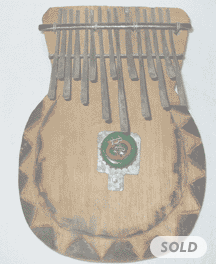
Ndimba is a smaller version of the 15-key karimba. As he explains,
ndimba come in male and female versions. The male version is a regular rectangular
sound-board and is normally played by women players. The female ndimba however
has a shape that mimicks a woman's lower chest, waist and hips giving it a radically
different look and feel. The lower portion of the soundboard which takes the
shape of a woman's hips is where the male player holds the instrument while
he plays the instrument. Your imagination is welcome here!
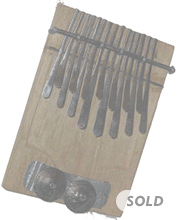
Kwanongoma (Tapera) Karimba: The Kwanongoma karimba is named after
Kwanongoma College of Music in Bulawayo, Zimbabwe where the instrument was refined
and received further technical development. It was the collaborative effort
of the late musicians and teachers, Jeke Tapera and ethnomusicologist Hugh Tracey
that transformed the original 13-key Karimba in to what is now commonly known
as the 15-key Kwanongoma karimba. Because of its smallish size, the karimba
is hard to mount in a large calabash gourd for amplification. A smaller gourd
leaves too little room for the players' hands in the gourd to make is practical.
For that reason, the development team at Kwanongoma invented a high resonant
cylindrical wooden chamber into which the karimba is mounted. It is attached
to the base of the chamber by three screws and should the player wish to remove
it from the chamber, they simply unscrew it. The chamber provides first level
amplification. The Kwanongoma karimba has 15 keys. It suffices to note that
the karimba is the instrument that inspired Hugh Tracey to build the Kalimba
(African Musical Instruments) which, unlike the Karimba has a western tuning.
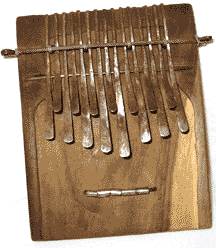 Karimba
is a smaller instrument in the mbira family. It was popular with the waNyika
people of eastern Zimbabwe. During the partition of Africa, Shona speaking people
who played Karimba ended up being residents and citizens of Mozambique where
the instrument flourished. It was during a family re-unions that the late Jeke
Tapera brought the instrument back to Zimbabwe. A relatively easy instrument
to play with a fairly modern repetoire, it is primarily a solo instrument. Most
of the standalone instruments on this site where built by Tshaka Chawasarira.
Karimba
is a smaller instrument in the mbira family. It was popular with the waNyika
people of eastern Zimbabwe. During the partition of Africa, Shona speaking people
who played Karimba ended up being residents and citizens of Mozambique where
the instrument flourished. It was during a family re-unions that the late Jeke
Tapera brought the instrument back to Zimbabwe. A relatively easy instrument
to play with a fairly modern repetoire, it is primarily a solo instrument. Most
of the standalone instruments on this site where built by Tshaka Chawasarira.